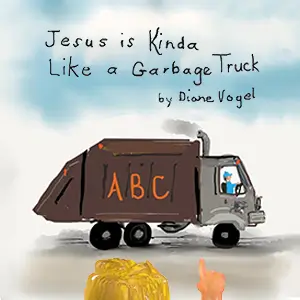
Gratitude is one of the most powerful habits a child can develop, yet it rarely grows by accident. It is cultivated through repetition, modeling, and meaningful language that children can understand and repeat. Simple phrases shape perspective. When a child learns to say, “I am glad,” that small sentence becomes more than words. It becomes a lens through which they interpret the world. In Jesus Is Kinda Like a Garbage Truck, by Diane Vogel, the repeated declaration, “I am glad” gently trains young readers to respond to faith, help, and protection with gratitude.
Children often focus on what feels immediate and visible. When something goes wrong, disappointment can dominate their emotions. Teaching gratitude requires redirecting attention toward what is good, helpful, and hopeful. Repetition plays a central role. When children hear a positive phrase consistently connected to meaningful truths, they begin to internalize it. The phrase, “I am glad” becomes a natural response rather than a forced instruction.
Storytelling is one of the most effective ways to nurture this habit. Stories create emotional connections that simple commands cannot. In Diane Vogel’s book, each comparison between Jesus and a powerful machine concludes with the same joyful response. Whether Jesus clears obstacles like a snowplow, carries heavy burdens like a dump truck, or removes sin like a garbage truck, the child is invited to respond with gratitude. The repetition reinforces the emotional outcome of each lesson and makes thankfulness memorable.
Modeling gratitude is equally important. Children mirror what they observe. When adults express appreciation for everyday blessings, children learn that gratitude belongs in daily life. Saying, “I am glad we have food today,” or “I am glad we can spend time together,” shows that thankfulness is woven into ordinary moments.
Visual learning strengthens this process. Children respond to concrete images. When they imagine a bulldozer clearing a path or a firetruck rushing to help, relief and security follow. Connecting those feelings to the phrase, “I am glad” builds a reflex of thankfulness tied to trust and safety.
Gratitude does not deny difficulty. Children experience frustration and fear. Encouraging them to say, “I am glad” does not dismiss those feelings. Instead, it helps them recognize that even within challenges, there is help and hope. When a snowplow clears heavy snow, it does not erase the storm. It makes the road passable. This teaches resilience alongside gratitude.
Medical and psychological research supports this practice. A consistent attitude of gratitude is associated with greater emotional stability, lower stress levels, improved sleep, and better overall health. In contrast, chronic negativity is linked to heightened stress responses and harmful effects on the body. Developing a grateful outlook during childhood strengthens emotional regulation, builds coping skills, and supports long-term well-being.
Faith-based gratitude deepens when children connect blessings to a caring source. In Jesus Is Kinda Like a Garbage Truck, by Diane Vogel, the comparisons emphasize protection, strength, and forgiveness. Gratitude becomes relational. Children are not only glad for what they receive. They are glad for who provides it.
Gratitude learned early becomes gratitude practiced for life. Through engaging stories and relatable imagery, Jesus Is Kinda Like a Garbage Truck, by Diane Vogel, offers families a meaningful way to help children notice goodness, recognize help, and respond with joy.
Head Over To Our Website: https://dianevogel.com/shop/
Available On Amazon : https://www.amazon.com/dp/B0G4B5XL4W